All Stories

Monday, July 13, 2015

                    You all know passage of electricity through a metal wire means the passage of a stream of electrons. The passage of a stream of electrons through a conducting wire is equivalent to the passage of an electric current in the opposite direction.

        Q1. What are the uses of an electric current ?
                            A1. 1. Obtaining the light energy (ex: Bulb)
                                   2. Obtaining the heat energy (ex: heater)

                                   3. Obtaining the Sound energy (ex radio)
                      

                    Most of the chemical reactions involve simultaneous oxidation and reductions. Such a reaction is called a redox reaction. Electrons are generated in a redox reaction. But we cannot use them for any useful purpose. Can you think why? 

       Q2. Consider a Zn rod that has been immersed in a CuSO4 solution. What will be your observations ? 

Redox Reactions as electron transfer
                                             A zinc rod is immersed in a CuSO4 solution

                            A2. Here, a redox reaction takes place as we mentioned earlier. The following observations can be seen. 
                                1. The color of the  CuSO4 solution near the zinc rod fades
                                2. Deposition of a brown dust on the zinc rod 
                                3. Dissolution of the zinc rod

       Q3. Write down the oxidation and reduction half reactions and redox the reactions that occur in the example given above in Q2.
                 
                A3. Oxidation half reaction

Redox Reactions as electron transfer
                        Reduction half reaction

Redox Reactions as electron transfer
                        Redox Reaction
Redox Reactions as electron transfer

                     We Can explain the observations given above in Q2 with the help of the reactions given in Q3. Zn removes two electrons forming Zn 2+ and at the same place Cu2+ gains those two electrons depositing as Cu. Therefore you cannot use the electrons generated by the oxidation reaction to obtain a beneficial electric current. 
                          If you planned to set up the happening of the redox reaction above, not in the same place but in two different places, then you will have to transfer the electrons removed by Zn, forming Zn 2+ towards Cu2+ to deposit as Cu. To achieve this you can use the apparatus given below. 

Redox Reactions as electron transfer

Daniell Cell (incompleted)

Here the connection between two two systems has been established by using a conducting wire. Now you can transfer the electrons removed by Zn directly towards cu2+ through the wire and Cu rod.

Redox Reactions as electron transfer

Daniell Cell (completed) with the salt bridge

Redox Reactions as electron transfer

Daniell Cell (completed) with the prous wall

                    If you setup the apparatus as given above in the figure in Q7, You can use the current created to do external work. This type of an apparatus is called an electrochemical cell or a voltaic cell. We sometimes call it as a Galvanic cell where spontaneous redox reactions take place to produce electric current and do electric work. The compartment that can be separated from a salt bride or a porous wall is called an electrode or half cell. You can simply use the word cell to identify a Galvanic cell. There are two half cells in a Galvanic cell. In the above example Cu rod and CuSO4 solution forms one half cell. Zn rod and ZnSO4 solution forms the other half cell. We can use the word electrode to identify the metal rod in a half cell also. Quite often it is used to identify a half cell as well. The solution inside a half cell is called an electrolyte.

                   Generally the cell, that consist of Cu and Zn half cells is called the Daniell Cell.  We can observe everything that happens in one system as discussed in Q3 in this Daniell cell also.

Operation of the salt bridge and porous wall

              Consider the Daniell cell above. The Zn atoms in the Zn rod rod remove electrons and come to the ZnSO4 solution as Zn 2+ . The Cu2+ ions in the  CuSO4 solution gain these electrons, that coming through the wire and Cu rod and deposit on the Cu rod as Cu. When this process take the no of Zn2+ ions in the  ZnSO4 solution would be increased compared to  SO4ions. The no of Cu2+ ions in the  CuSO4 solution would be decreased compared to SO4ions. Therefore ZnSO4 solution would get slight positively charged and CuSO4 solution would get slight negatively charged. Finally an electrical imbalance is created in the cell and no further net flow of current will occur. To obtain a current from this electrochemical cell, the solutions must be electrically neutral. So that we use a salt bridge to establish this electrical neutrality. The Salt bridge consists with KCL. When the positive nature is increased in the ZnSO4 solution, Cl ions in the salt bridge migrate to the ZnSO4 solution and reduce the positive charge. When the negative nature is increased in the CuSO4 solution, K+ ions in the salt bridge migrate to the CuSO4 solution and reduce the negative charge. Therefore positive and negative ions go in opposite directions through a salt bridge. 

Redox Reactions as electron transfer

Direction of the movement of ions inside the salt bridge

Now you all know that a porous wall is a simple device used to connect two half cells in a Galvanic cell. It is made out with microscopic holes. It separates two electrolyte solutions. So that ions could migrate between two solutions bringing electrical contact. consider the Daniell cell above. Cu2+ ions will start diffuse in to the ZnSO4 solution and Zn2+ ions will start to diffuse in to the CuSO4 solution when the two electrolyte solutions are connected at the porous wall. Therefore you can see a migration of ions through the wall. That means a current passes the circuit closed.


Redox Reactions as electron transfer

                    You all know passage of electricity through a metal wire means the passage of a stream of electrons. The passage of a stream of electrons through a conducting wire is equivalent to the passage of an electric current in the opposite direction.

        Q1. What are the uses of an electric current ?
                            A1. 1. Obtaining the light energy (ex: Bulb)
                                   2. Obtaining the heat energy (ex: heater)

                                   3. Obtaining the Sound energy (ex radio)
                      

                    Most of the chemical reactions involve simultaneous oxidation and reductions. Such a reaction is called a redox reaction. Electrons are generated in a redox reaction. But we cannot use them for any useful purpose. Can you think why? 

       Q2. Consider a Zn rod that has been immersed in a CuSO4 solution. What will be your observations ? 

Redox Reactions as electron transfer
                                             A zinc rod is immersed in a CuSO4 solution

                            A2. Here, a redox reaction takes place as we mentioned earlier. The following observations can be seen. 
                                1. The color of the  CuSO4 solution near the zinc rod fades
                                2. Deposition of a brown dust on the zinc rod 
                                3. Dissolution of the zinc rod

       Q3. Write down the oxidation and reduction half reactions and redox the reactions that occur in the example given above in Q2.
                 
                A3. Oxidation half reaction

Redox Reactions as electron transfer
                        Reduction half reaction

Redox Reactions as electron transfer
                        Redox Reaction
Redox Reactions as electron transfer

                     We Can explain the observations given above in Q2 with the help of the reactions given in Q3. Zn removes two electrons forming Zn 2+ and at the same place Cu2+ gains those two electrons depositing as Cu. Therefore you cannot use the electrons generated by the oxidation reaction to obtain a beneficial electric current. 
                          If you planned to set up the happening of the redox reaction above, not in the same place but in two different places, then you will have to transfer the electrons removed by Zn, forming Zn 2+ towards Cu2+ to deposit as Cu. To achieve this you can use the apparatus given below. 

Redox Reactions as electron transfer

Daniell Cell (incompleted)

Here the connection between two two systems has been established by using a conducting wire. Now you can transfer the electrons removed by Zn directly towards cu2+ through the wire and Cu rod.

Redox Reactions as electron transfer

Daniell Cell (completed) with the salt bridge

Redox Reactions as electron transfer

Daniell Cell (completed) with the prous wall

                    If you setup the apparatus as given above in the figure in Q7, You can use the current created to do external work. This type of an apparatus is called an electrochemical cell or a voltaic cell. We sometimes call it as a Galvanic cell where spontaneous redox reactions take place to produce electric current and do electric work. The compartment that can be separated from a salt bride or a porous wall is called an electrode or half cell. You can simply use the word cell to identify a Galvanic cell. There are two half cells in a Galvanic cell. In the above example Cu rod and CuSO4 solution forms one half cell. Zn rod and ZnSO4 solution forms the other half cell. We can use the word electrode to identify the metal rod in a half cell also. Quite often it is used to identify a half cell as well. The solution inside a half cell is called an electrolyte.

                   Generally the cell, that consist of Cu and Zn half cells is called the Daniell Cell.  We can observe everything that happens in one system as discussed in Q3 in this Daniell cell also.

Operation of the salt bridge and porous wall

              Consider the Daniell cell above. The Zn atoms in the Zn rod rod remove electrons and come to the ZnSO4 solution as Zn 2+ . The Cu2+ ions in the  CuSO4 solution gain these electrons, that coming through the wire and Cu rod and deposit on the Cu rod as Cu. When this process take the no of Zn2+ ions in the  ZnSO4 solution would be increased compared to  SO4ions. The no of Cu2+ ions in the  CuSO4 solution would be decreased compared to SO4ions. Therefore ZnSO4 solution would get slight positively charged and CuSO4 solution would get slight negatively charged. Finally an electrical imbalance is created in the cell and no further net flow of current will occur. To obtain a current from this electrochemical cell, the solutions must be electrically neutral. So that we use a salt bridge to establish this electrical neutrality. The Salt bridge consists with KCL. When the positive nature is increased in the ZnSO4 solution, Cl ions in the salt bridge migrate to the ZnSO4 solution and reduce the positive charge. When the negative nature is increased in the CuSO4 solution, K+ ions in the salt bridge migrate to the CuSO4 solution and reduce the negative charge. Therefore positive and negative ions go in opposite directions through a salt bridge. 

Redox Reactions as electron transfer

Direction of the movement of ions inside the salt bridge

Now you all know that a porous wall is a simple device used to connect two half cells in a Galvanic cell. It is made out with microscopic holes. It separates two electrolyte solutions. So that ions could migrate between two solutions bringing electrical contact. consider the Daniell cell above. Cu2+ ions will start diffuse in to the ZnSO4 solution and Zn2+ ions will start to diffuse in to the CuSO4 solution when the two electrolyte solutions are connected at the porous wall. Therefore you can see a migration of ions through the wall. That means a current passes the circuit closed.


Posted at 2:46 AM |  by Unknown

Wednesday, July 8, 2015

Introduction

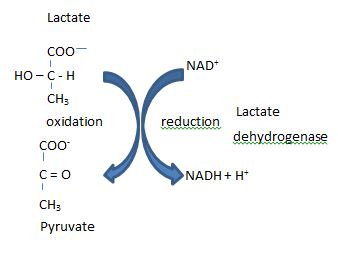
                 The living system required energy to keep their biological activities and sustain. Bioenergetics or biochemical thermodynamics is the study of energy changes accompanying biochemical reactions within the organisms. The reactions are accompanied by liberation of energy as the reacting system move from higher to lower energy level. Most frequently, the energy is liberated in the from of heat. In non-biologic systems, heat energy may be transformed into mechanical of electrical energy. Since biological systems are essentially exothermic, no direct use can be made of heat liberated in biological reactions to drive the vital processes that require energy. These reactions - synthetic reactions, muscular contraction, nerve conduction, and active transport, obtain energy by chemical linkage or coupling to oxidation reactions (Image 1.1 ).

Energy For Life

Coupling of oxidation and reduction reactions

                 The conversion of metabolite A to metabolite B occurs with release of energy. It is coupled to another reaction, in which energy is required to convert metabolite C to metabolite D. As some of the energy liberated in the degradative reaction is transformed to the synthetic reaction in a form of other than heat, the normal chemical terms exothermic and endothermic can not be applied to these reactions. Rather, the terms exogonic and endogonic are use to indicate that a process is accompanied by loss or gain, respectively, of free energy, regardless of the form of energy involved. In practice, and endogonic process can not exist independently, but must be coupled exogonic / endogonic system where the overall net change is exogonic.

Energy For Life

Introduction

                 The living system required energy to keep their biological activities and sustain. Bioenergetics or biochemical thermodynamics is the study of energy changes accompanying biochemical reactions within the organisms. The reactions are accompanied by liberation of energy as the reacting system move from higher to lower energy level. Most frequently, the energy is liberated in the from of heat. In non-biologic systems, heat energy may be transformed into mechanical of electrical energy. Since biological systems are essentially exothermic, no direct use can be made of heat liberated in biological reactions to drive the vital processes that require energy. These reactions - synthetic reactions, muscular contraction, nerve conduction, and active transport, obtain energy by chemical linkage or coupling to oxidation reactions (Image 1.1 ).

Energy For Life

Coupling of oxidation and reduction reactions

                 The conversion of metabolite A to metabolite B occurs with release of energy. It is coupled to another reaction, in which energy is required to convert metabolite C to metabolite D. As some of the energy liberated in the degradative reaction is transformed to the synthetic reaction in a form of other than heat, the normal chemical terms exothermic and endothermic can not be applied to these reactions. Rather, the terms exogonic and endogonic are use to indicate that a process is accompanied by loss or gain, respectively, of free energy, regardless of the form of energy involved. In practice, and endogonic process can not exist independently, but must be coupled exogonic / endogonic system where the overall net change is exogonic.

Posted at 7:14 AM |  by Unknown

Friday, July 3, 2015

Introduction

                  Nutrition is the process of obtaining nutrients from food by organisms in order to maintain life. These nutrients are important for various metabolic reactions, which occur in organisms for the synthesis of biomolecules for growth, repair and to provide energy.

                         The method by which an organism obtains food is referred to as the mode of nutrition. It is a known fact that, organisms either synthesize their own food or consume food prepared by other organisms. According to the mode of nutrition organisms are broadly classified in to two categories, Autotrophic organisms and Heterotrophic organisms.

               Autotrophic (self-Feeding) organisms manufacture their own food ( The Organic compounds) from inorganic raw materials ( carbon dioxide and water) obtained from the environment. Autotrophs can further divide into two groups according to their source of energy, Photoautotrophs and Chemoautotrophs. Radiant energy from the light is essential for photosynthesis while the chemosynthesis utilize the energy obtained from the chemical oxidation of simple inorganic compounds such as iron, sulphur and ammonium ions.

Forms Of Heterotrophic Nutrition And Feeding Mechanisms

                          In Contrast to autotrophs, heterotrophic organisms are unable to synthesize their own food. Therefore, heterotrophs utilize preformed food with complex organic substances (organic carbon compounds) for their nutrition. There are three main categories of heterotrophic nutrition, which you will be learning in the section ' main categories of heterotrophic nutrition'.

                          Due to the utilization of performed food, heterotrophs need to take them into their body using a feeding mechanism. The next section of the session deals with the ' feeding mechanisms in heterotrophic animals '. Here, we will be dealing mainly with the feeding mechanisms of holozoic animals, as it is the group which shows variety of adaptions. You do not find any feeding mechanisms in saprophytes as they absorb digested food through their body surface. Depending on the type of food they eat, parasites show feeding mechanisms and adaptions for feeding.

Forms Of Heterotrophic Nutrition And Feeding Mechanisms

Introduction

                  Nutrition is the process of obtaining nutrients from food by organisms in order to maintain life. These nutrients are important for various metabolic reactions, which occur in organisms for the synthesis of biomolecules for growth, repair and to provide energy.

                         The method by which an organism obtains food is referred to as the mode of nutrition. It is a known fact that, organisms either synthesize their own food or consume food prepared by other organisms. According to the mode of nutrition organisms are broadly classified in to two categories, Autotrophic organisms and Heterotrophic organisms.

               Autotrophic (self-Feeding) organisms manufacture their own food ( The Organic compounds) from inorganic raw materials ( carbon dioxide and water) obtained from the environment. Autotrophs can further divide into two groups according to their source of energy, Photoautotrophs and Chemoautotrophs. Radiant energy from the light is essential for photosynthesis while the chemosynthesis utilize the energy obtained from the chemical oxidation of simple inorganic compounds such as iron, sulphur and ammonium ions.

Forms Of Heterotrophic Nutrition And Feeding Mechanisms

                          In Contrast to autotrophs, heterotrophic organisms are unable to synthesize their own food. Therefore, heterotrophs utilize preformed food with complex organic substances (organic carbon compounds) for their nutrition. There are three main categories of heterotrophic nutrition, which you will be learning in the section ' main categories of heterotrophic nutrition'.

                          Due to the utilization of performed food, heterotrophs need to take them into their body using a feeding mechanism. The next section of the session deals with the ' feeding mechanisms in heterotrophic animals '. Here, we will be dealing mainly with the feeding mechanisms of holozoic animals, as it is the group which shows variety of adaptions. You do not find any feeding mechanisms in saprophytes as they absorb digested food through their body surface. Depending on the type of food they eat, parasites show feeding mechanisms and adaptions for feeding.

Posted at 7:17 AM |  by Unknown

Tuesday, June 30, 2015

Introduction

              Use of man-made synthetic polymeric meterials plays a huge effect on our everyday life. A large number of industries (e.g. packaging, textile, automobile, paper etc ) are based on synthetic polymers (poly = many ; mer = Parts ) such as polyethylene (PE), poly (vinyl chloride) (PVC), polyesters, nylon etc. and natural polymers such as rubber, cellulose, etc These natural polymers have been used for a long time, for example natural rubber was discovered in 1492 by columbus when he was in south america.
Synthetic polymers and their applications
              Synthetic polymers can be classified according to their response to heat. A thermoplastic polymer is one that can be softened by heating and then formed into desired shapes by applying pressure (moulding). In contrast, thermosetting polymers are permanently hard at elevated temperatures and pressures. They cannot be softened and remoulded. Polymers can be divided mainly into four types depending on their properties - plastics (e.g. PVC) , fibres (e.g. polyamides), elastomers (e.g rubber) and adhesives (e.g. resins). One of the most interesting uses of polymers  (e.g. biomedical polymers) has beer as replacements for diseased, worn out or missing parts of the human body such as leg , arm, lung, heart, liver, kidney, arteries, teeth , knee joints and hip joints. Synthetic polymers could pose a serious threat to environment unless we make them biodegradable. 

             All polymers are macromolecules with the same repeating unit but all macromolecules are not polymers. For example, proteins and nucleic acids (DNA and RNA) are macromolecules but they do not have the same repeating unit. Natural polymers and macromolecules such as polysaccharides (e.g. Cellulose, starch, etc) and nucleic acids (responsible for heredity) based on sugars and phosphates are discussed in session.

            When naming homopolymers (i.e polymers with one monomer unit), the name of the monomer is written after the prefix poly, e.g polyethylene. If the name of the monomer is not a one word the name of the monomer is written within brackets, e.g. poly (vinyl chloride). 

Synthetic polymers and their applications

Synthetic polymers and their applications

Introduction

              Use of man-made synthetic polymeric meterials plays a huge effect on our everyday life. A large number of industries (e.g. packaging, textile, automobile, paper etc ) are based on synthetic polymers (poly = many ; mer = Parts ) such as polyethylene (PE), poly (vinyl chloride) (PVC), polyesters, nylon etc. and natural polymers such as rubber, cellulose, etc These natural polymers have been used for a long time, for example natural rubber was discovered in 1492 by columbus when he was in south america.
Synthetic polymers and their applications
              Synthetic polymers can be classified according to their response to heat. A thermoplastic polymer is one that can be softened by heating and then formed into desired shapes by applying pressure (moulding). In contrast, thermosetting polymers are permanently hard at elevated temperatures and pressures. They cannot be softened and remoulded. Polymers can be divided mainly into four types depending on their properties - plastics (e.g. PVC) , fibres (e.g. polyamides), elastomers (e.g rubber) and adhesives (e.g. resins). One of the most interesting uses of polymers  (e.g. biomedical polymers) has beer as replacements for diseased, worn out or missing parts of the human body such as leg , arm, lung, heart, liver, kidney, arteries, teeth , knee joints and hip joints. Synthetic polymers could pose a serious threat to environment unless we make them biodegradable. 

             All polymers are macromolecules with the same repeating unit but all macromolecules are not polymers. For example, proteins and nucleic acids (DNA and RNA) are macromolecules but they do not have the same repeating unit. Natural polymers and macromolecules such as polysaccharides (e.g. Cellulose, starch, etc) and nucleic acids (responsible for heredity) based on sugars and phosphates are discussed in session.

            When naming homopolymers (i.e polymers with one monomer unit), the name of the monomer is written after the prefix poly, e.g polyethylene. If the name of the monomer is not a one word the name of the monomer is written within brackets, e.g. poly (vinyl chloride). 

Synthetic polymers and their applications

Posted at 11:25 PM |  by Unknown

Sunday, June 28, 2015

During the process of transmission, it is obvious that something passes from the sounding body to the ear, in order to produce the sensation of sound from the motion of the sounding body we guess that some sort of wave motion passes outwards from it. It can be easily shown that a medium (air or some other medium) is indispensable for the propagation of sound.
The Transmission of sounds

All materials, however, can transmit sound waves, if a faint tapping or scratching be made at one end of a long table, on putting the ear to the other end of the table, this sound can be heard even when the sound is too faint to be heard if the ear is not placed close to the wood. This shows that sound waves have been transmitted through the wood.

If you examine it carefully, you will notice that every source of sound or part of it vibrates when it is set to produce sound. We hope you are familiar with the prongs of a tuning-fork. The prongs of a sounding tuning-fork and the plucked string of a guitar can actually be seen to vibrate. The vibration of a drum or a bell may not be visible but they can often be felt: when they are checked by the hand the sound ceases.

Question

What is vibration ?

A vibration is a rapid to and fro motion which is continually repeated.

The vibration of a prong of a tuning-fork may be investigated by attaching a bristle to one of its prongs, and drawing under it a smoke glass plate while the prongs are vibrating. (Image 1.1.1)

A vibration is a rapid to and fro motion which is continually repeated.
(Image 1.1.1)

If a glass plate is moved with a uniform velocity the trace made by the  bristle will be similar to the wave pattern shown in Image 1.1.2

(Image 1.1.2)


This particular type of vibration is the simplest possible, and is called simple harmonic motion as you know from earlier sessions.

Due to this vibration of the source of sound, the surrounding medium gets disturbed and this disturbance travel through the medium without the medium moving bodily with it . We call this is a wave. a wave allows energy to be transferred from one point to another some distance away without any particles of the medium travelling between the two points. 

There are many kinds of waves such as light waves, radio waves, water waves and wave in stretching strings, rods and so on. All these waves can be divided into two main categories. 
  1. Transverse waves
  2.  Longitudinal waves

The Transmission of sounds

During the process of transmission, it is obvious that something passes from the sounding body to the ear, in order to produce the sensation of sound from the motion of the sounding body we guess that some sort of wave motion passes outwards from it. It can be easily shown that a medium (air or some other medium) is indispensable for the propagation of sound.
The Transmission of sounds

All materials, however, can transmit sound waves, if a faint tapping or scratching be made at one end of a long table, on putting the ear to the other end of the table, this sound can be heard even when the sound is too faint to be heard if the ear is not placed close to the wood. This shows that sound waves have been transmitted through the wood.

If you examine it carefully, you will notice that every source of sound or part of it vibrates when it is set to produce sound. We hope you are familiar with the prongs of a tuning-fork. The prongs of a sounding tuning-fork and the plucked string of a guitar can actually be seen to vibrate. The vibration of a drum or a bell may not be visible but they can often be felt: when they are checked by the hand the sound ceases.

Question

What is vibration ?

A vibration is a rapid to and fro motion which is continually repeated.

The vibration of a prong of a tuning-fork may be investigated by attaching a bristle to one of its prongs, and drawing under it a smoke glass plate while the prongs are vibrating. (Image 1.1.1)

A vibration is a rapid to and fro motion which is continually repeated.
(Image 1.1.1)

If a glass plate is moved with a uniform velocity the trace made by the  bristle will be similar to the wave pattern shown in Image 1.1.2

(Image 1.1.2)


This particular type of vibration is the simplest possible, and is called simple harmonic motion as you know from earlier sessions.

Due to this vibration of the source of sound, the surrounding medium gets disturbed and this disturbance travel through the medium without the medium moving bodily with it . We call this is a wave. a wave allows energy to be transferred from one point to another some distance away without any particles of the medium travelling between the two points. 

There are many kinds of waves such as light waves, radio waves, water waves and wave in stretching strings, rods and so on. All these waves can be divided into two main categories. 
  1. Transverse waves
  2.  Longitudinal waves

Posted at 9:04 PM |  by Unknown

Wednesday, June 17, 2015

Gases are all around us. Many of them are vital to our life. The oxygen we breathe reacts with certain nutrients such as carbohydrates or lipids to give us energy. We exhale carbon dioxide and water. Plants take up carbon dioxide and water vapor to convert back in to oxygen and nutrients in the presence of sun light.
Gases are all around us. Many of them are vital to our life.

Other gases in the atmosphere have different roles. For an example, plants cannot use atmospheric nitrogen directly. Certain micro organisms called nitrogen fixing bacteria take up nitrogen and convert it to nitrates.

Some of the gases are responsible for the green house effect. These gases include; water vapor (H2O), carbon dioxide (CO2), methane (CH4), nitrous oxide (N2O), chlorofluorocarbons (CFxClx) and tropospheric ozone (O3).

Characteristic properties of gases

There are some general Characteristic of gases which distinguish them from solids and gases. These are called Characteristic properties of gases. Some of them are listed as follows.

1. They are easy to compress - compressibility.

In General, compressibility is the ability of something to be "squashed" into a smaller space. Gases are easy to compress even with relatively little pressure. An internal combustion engine is a good example. Compared to gases, liquids are very less compressible. How about solids ? You can understand the compressibility of solids, if you try to squeeze a big table in to very small room. It is really hard!

2. They expand to fill their containers- expandability.

We know that gases tend expand until they fill whatever contains them. Therefore, it is safe to assume that the volume of gas is equal to the volume of its container.

3. They occupy far more space than the liquids or solids at the same pressure from which they form.

Generally, the volume of a liquid or solid increases approximately 800 times when it forms  a gas. This large change in volume can be utilized to do work such as steam engine. Here, the escaping steam can be made to do work. Same phenomenon occurs on a much smaller scale when we "POP" popcorn. When the kernel of popcorn is heated in oil, the liquid inside the kernel turns in to gases. The pressure build up inside the kernel is enormous and the kernel eventually explodes.

Common gases at room temperature

It might be useful to understand which elements or compounds are gases at room temperature. 

According to this table, we can observe several patterns.

1. Both elements (eg: He) and compounds (eg: CO2) may be gases room temperature.
2. Elements that are gases at room temperature are all non metals (eg: He, O2).
3. Compounds that are gases at room temperature are all covalent compounds (eg: CO2,NH3)
4. All these gases have relatively small molecular weights but there may be rare exceptions.

Some of the common gases at room temperature.

Element or compound
Molecular Weight
H2 (hydrogen)
2.02
He (helium)
4.00
CH4 (methane)
16.02
NH2 (ammonia)
17.03
Ne (neon)
20.18
HCN (hydrogen cyanide)
27.03
CO (carbon monoxide)
28.01
N2 (nitrogen)
28.01
NO (nitrogen oxide)
30.01
C2H6 (ethane)
30.07
O2 (oxygen)
32.00
PH3 (phosphine)
34.00
H2S (hydrogen sulfide)
34.08
HCl (hydrogen chloride)
36.46
F2 (fluorine )
38.00
Ar (argon)
39.95
CO2 (carbon dioxide)
44.01
N2O ( dinitrogen oxide)
44.01
C3H8  ( propane)
44.10
NO2 (nitrogen dioxide)
46.01
O3 (ozone)
48.00

Why gases are important ?

Gases are all around us. Many of them are vital to our life. The oxygen we breathe reacts with certain nutrients such as carbohydrates or lipids to give us energy. We exhale carbon dioxide and water. Plants take up carbon dioxide and water vapor to convert back in to oxygen and nutrients in the presence of sun light.
Gases are all around us. Many of them are vital to our life.

Other gases in the atmosphere have different roles. For an example, plants cannot use atmospheric nitrogen directly. Certain micro organisms called nitrogen fixing bacteria take up nitrogen and convert it to nitrates.

Some of the gases are responsible for the green house effect. These gases include; water vapor (H2O), carbon dioxide (CO2), methane (CH4), nitrous oxide (N2O), chlorofluorocarbons (CFxClx) and tropospheric ozone (O3).

Characteristic properties of gases

There are some general Characteristic of gases which distinguish them from solids and gases. These are called Characteristic properties of gases. Some of them are listed as follows.

1. They are easy to compress - compressibility.

In General, compressibility is the ability of something to be "squashed" into a smaller space. Gases are easy to compress even with relatively little pressure. An internal combustion engine is a good example. Compared to gases, liquids are very less compressible. How about solids ? You can understand the compressibility of solids, if you try to squeeze a big table in to very small room. It is really hard!

2. They expand to fill their containers- expandability.

We know that gases tend expand until they fill whatever contains them. Therefore, it is safe to assume that the volume of gas is equal to the volume of its container.

3. They occupy far more space than the liquids or solids at the same pressure from which they form.

Generally, the volume of a liquid or solid increases approximately 800 times when it forms  a gas. This large change in volume can be utilized to do work such as steam engine. Here, the escaping steam can be made to do work. Same phenomenon occurs on a much smaller scale when we "POP" popcorn. When the kernel of popcorn is heated in oil, the liquid inside the kernel turns in to gases. The pressure build up inside the kernel is enormous and the kernel eventually explodes.

Common gases at room temperature

It might be useful to understand which elements or compounds are gases at room temperature. 

According to this table, we can observe several patterns.

1. Both elements (eg: He) and compounds (eg: CO2) may be gases room temperature.
2. Elements that are gases at room temperature are all non metals (eg: He, O2).
3. Compounds that are gases at room temperature are all covalent compounds (eg: CO2,NH3)
4. All these gases have relatively small molecular weights but there may be rare exceptions.

Some of the common gases at room temperature.

Element or compound
Molecular Weight
H2 (hydrogen)
2.02
He (helium)
4.00
CH4 (methane)
16.02
NH2 (ammonia)
17.03
Ne (neon)
20.18
HCN (hydrogen cyanide)
27.03
CO (carbon monoxide)
28.01
N2 (nitrogen)
28.01
NO (nitrogen oxide)
30.01
C2H6 (ethane)
30.07
O2 (oxygen)
32.00
PH3 (phosphine)
34.00
H2S (hydrogen sulfide)
34.08
HCl (hydrogen chloride)
36.46
F2 (fluorine )
38.00
Ar (argon)
39.95
CO2 (carbon dioxide)
44.01
N2O ( dinitrogen oxide)
44.01
C3H8  ( propane)
44.10
NO2 (nitrogen dioxide)
46.01
O3 (ozone)
48.00

Posted at 12:08 AM |  by Unknown

Tuesday, June 16, 2015

Matter is defined as anything that has mass and takes space. It is everything around us. Rocks, oceans, plants, animals, houses and cars are all examples of matter. Although matter appears to be continuous and unbroken, it is not so. According to the ancient Greek Philosopher Democritus (470- 370 BC) matter is actually composed of discrete tiny particles called atoms, derived from the Greek word atoms, meaning "indivisible" (Image 1) . Atoms may not be visible to the macroscopic eye, however, modern instrumental techniques available today such as X-ray diffraction and scanning tunneling microscopy show the position of individual atoms (Image 2).

A penny is made up of copper atoms packed tightly together
(Image 1) A penny is made up of copper atoms packed tightly together.

 Individual atoms can be seen as bumps on the surface of a solid by scanning tunneling microscopy. This is an image of the surface of copper.

(Image 2) Individual atoms can be seen as bumps on the surface of a solid by scanning tunneling microscopy. This is an image of the surface of copper.

You may remember from your ordinary level work that a purple solution is formed when a crystal of potassium permanganate (KMnO4) is placed in a beaker of water. This observation can be explained by the particulate nature of matter. Both the crystal and water are made up of particles. These particles mix together and as a result a coloured solution is produced. The movement of different particles among each other is called diffusion. (Image 3)  will further illustrate this phenomenon.

Mixing of potassium permanganate particles with water particles to give a coloured solution.


(Image 3) Mixing of potassium permanganate particles with water particles to give a coloured solution.

The Particulate nature of matter

Matter is defined as anything that has mass and takes space. It is everything around us. Rocks, oceans, plants, animals, houses and cars are all examples of matter. Although matter appears to be continuous and unbroken, it is not so. According to the ancient Greek Philosopher Democritus (470- 370 BC) matter is actually composed of discrete tiny particles called atoms, derived from the Greek word atoms, meaning "indivisible" (Image 1) . Atoms may not be visible to the macroscopic eye, however, modern instrumental techniques available today such as X-ray diffraction and scanning tunneling microscopy show the position of individual atoms (Image 2).

A penny is made up of copper atoms packed tightly together
(Image 1) A penny is made up of copper atoms packed tightly together.

 Individual atoms can be seen as bumps on the surface of a solid by scanning tunneling microscopy. This is an image of the surface of copper.

(Image 2) Individual atoms can be seen as bumps on the surface of a solid by scanning tunneling microscopy. This is an image of the surface of copper.

You may remember from your ordinary level work that a purple solution is formed when a crystal of potassium permanganate (KMnO4) is placed in a beaker of water. This observation can be explained by the particulate nature of matter. Both the crystal and water are made up of particles. These particles mix together and as a result a coloured solution is produced. The movement of different particles among each other is called diffusion. (Image 3)  will further illustrate this phenomenon.

Mixing of potassium permanganate particles with water particles to give a coloured solution.


(Image 3) Mixing of potassium permanganate particles with water particles to give a coloured solution.

Posted at 2:44 AM |  by Unknown

Monday, June 15, 2015

Do you know ice is a solid and water is a liquid; how the battery in your car works to start the engine; why glass is fragile but not plastics; how different colors originate in fireworks display; why fertilizers are used in agriculture; how bodies use food to maintain life ? Answers to all these questions and many more supplied by chemistry.

Chemistry is the science that deals with the study of matter and the Changes it undergoes

Chemistry is the science that deals with the study of matter and the Changes it undergoes. Often, it is referred to as the central science because it is needed to understand the other sciences and technologies.

Chemistry has enriched our lives in many ways. It has improved healthcare through the development of new drugs and vaccines that enhance our health and prolong our lives. The food production has been increased by the development of fertilizers and pesticides, which are all chemicals. The food we eat is colored, flavored, and preserved by various chemical additives. Our domestic requirements, e.g. Soap, Shampoo, Toothpaste, Cosmetics,......etc. are provided by chemistry. Amenities such as air conditioning, refrigeration and electronic gadgets that we use in our day to day life for our comfort, convenience and pleasure are also provided by chemistry. Products that we need for construction ( Cement glass, ceramics, Plastics, Paints, .... etc) are produced through the exploitation on chemistry. Fuels used by vehicles and machinery also depend on chemistry for their manufacture and purification.

As you can see, the uses of chemistry are many. However, its misuse can have disastrous consequences on living beings and the environment. Therefore, a basic knowledge of chemistry will help you understand the world around you better.

Why Study Chemistry ?

Do you know ice is a solid and water is a liquid; how the battery in your car works to start the engine; why glass is fragile but not plastics; how different colors originate in fireworks display; why fertilizers are used in agriculture; how bodies use food to maintain life ? Answers to all these questions and many more supplied by chemistry.

Chemistry is the science that deals with the study of matter and the Changes it undergoes

Chemistry is the science that deals with the study of matter and the Changes it undergoes. Often, it is referred to as the central science because it is needed to understand the other sciences and technologies.

Chemistry has enriched our lives in many ways. It has improved healthcare through the development of new drugs and vaccines that enhance our health and prolong our lives. The food production has been increased by the development of fertilizers and pesticides, which are all chemicals. The food we eat is colored, flavored, and preserved by various chemical additives. Our domestic requirements, e.g. Soap, Shampoo, Toothpaste, Cosmetics,......etc. are provided by chemistry. Amenities such as air conditioning, refrigeration and electronic gadgets that we use in our day to day life for our comfort, convenience and pleasure are also provided by chemistry. Products that we need for construction ( Cement glass, ceramics, Plastics, Paints, .... etc) are produced through the exploitation on chemistry. Fuels used by vehicles and machinery also depend on chemistry for their manufacture and purification.

As you can see, the uses of chemistry are many. However, its misuse can have disastrous consequences on living beings and the environment. Therefore, a basic knowledge of chemistry will help you understand the world around you better.

Posted at 12:07 AM |  by Unknown
Copyright © 2015 All Rights Reserved. SIPSAWIYA.COM Theme-junkieBloggertheme9
back to top